Crypto Swap: Exchange Tokens with Sumex

What Are Crypto Swaps
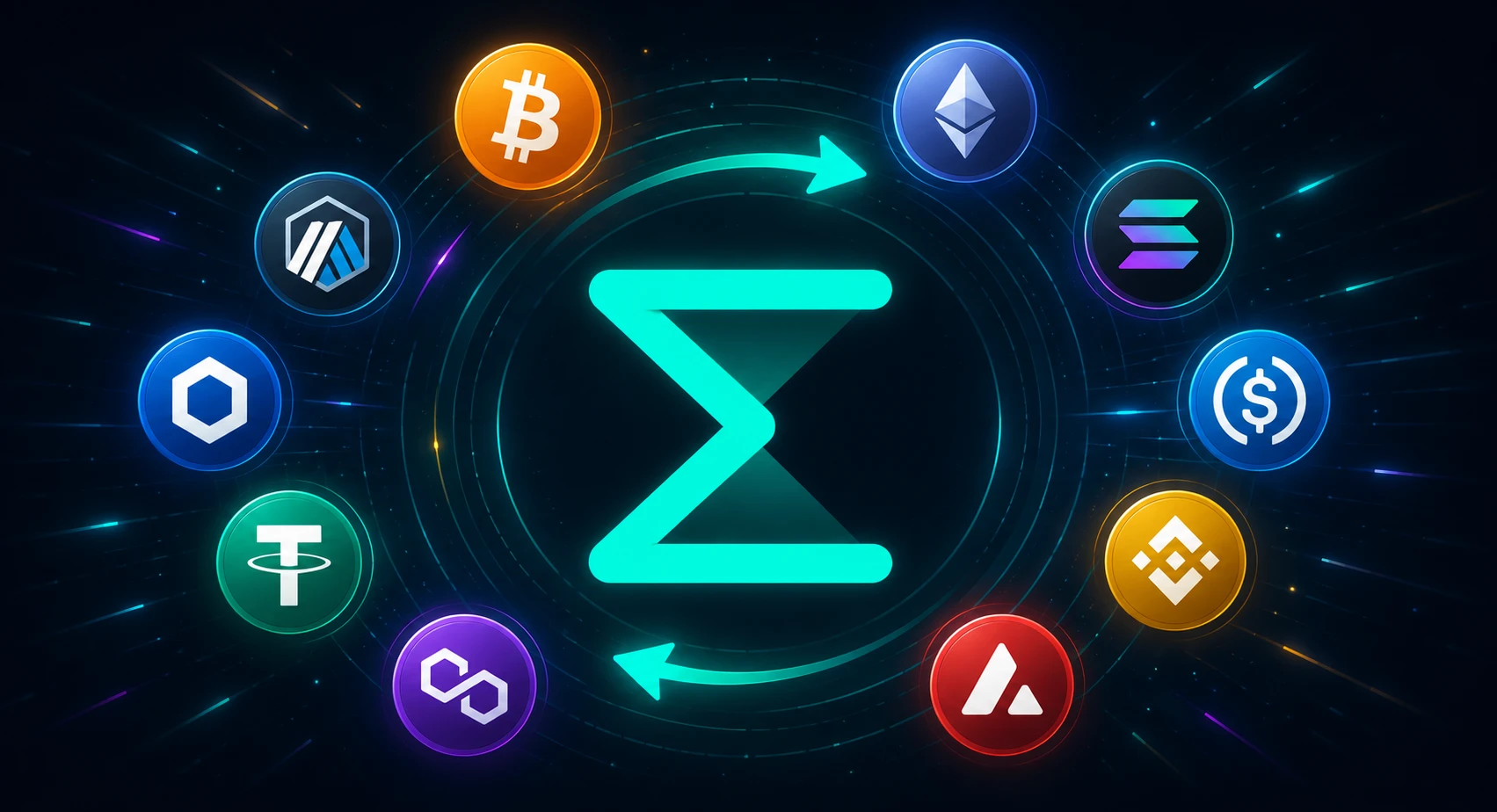
A crypto swap is the exchange of one token or digital asset for another directly through blockchain infrastructure without converting crypto assets into fiat currencies through a centralized exchange.
Instead of selling a token, withdrawing funds, and purchasing another asset separately, users can swap crypto assets directly within a single swap transaction flow. This model has become one of the core building blocks of DeFi and modern Web3 infrastructure. Swaps are used across Bitcoin and BTC trading, DeFi protocols, cross-chain operations, liquidity management, yield strategies, arbitrage, and onchain payments. As Web3 evolved, users began operating across multiple chains, ecosystems, and assets simultaneously. Manual bridging and fragmented trading workflows became inefficient and overly complex. This is why swap infrastructure has become a critical component of the broader crypto market and an important guide for navigating multi-chain Web3 activity.
How Crypto Swaps Work
Most modern swaps operate through decentralized exchanges (DEXs), DEX aggregators, and liquidity pools.
Instead of relying on traditional buyer-seller order books, DeFi protocols use pools of pre-supplied liquidity that enable automated asset exchanges.
When a user initiates a swap, the system searches for available liquidity, builds an execution route, calculates fees and gas costs, estimates slippage, and broadcasts the transaction to the blockchain network.
Depending on the assets and networks involved, execution may happen within a single liquidity pool, across multiple DEXs such as Uniswap, through intermediate tokens, or between separate blockchains.
Some transactions complete in a single step, while more advanced operations may require multi-hop routing, cross-chain bridging, or interaction with third-party bridge infrastructure.
For example, if direct liquidity between two assets is insufficient, the system may automatically route the trade through intermediate assets such as ETH, Ethereum-based tokens, or USDC to improve execution quality.
Slippage and Price Impact
The final amount received during a swap may differ from the original estimate.
This happens because of several factors, including market volatility, trade size, liquidity depth, and price movement during execution.
Slippage refers to the difference between the expected and actual execution price.
Price impact measures how much the transaction itself affects the liquidity pool price and the final exchange rate. Larger trades relative to available liquidity typically create stronger price movement.
These effects become more noticeable during volatile market conditions or when trading lower-liquidity assets.
Why Swap Aggregators Matter
Liquidity across the crypto ecosystem is highly fragmented.
Different assets trade on different DEXs, across multiple chains, with varying liquidity depth and fee structures.
Using a single exchange or centralized exchange platform does not always provide the best pricing or execution.
Swap aggregators solve this problem by analyzing multiple liquidity sources simultaneously across DEX protocols and blockchain networks, similar to infrastructure used by services such as Sumex.
Instead of manually searching for routes, the system compares prices, evaluates liquidity pools, estimates fees, builds optimized execution paths, and distributes order flow across multiple protocols when necessary.
This helps improve pricing, reduce price impact, optimize gas efficiency, improve execution quality, and simplify cross-chain activity. As a result, aggregators have become a standard layer within modern Web3 trading infrastructure.
How Swaps Work on Sumex
The Sumex swap infrastructure is designed around a unified Web3 app experience.
The platform combines liquidity aggregation, smart routing, cross-chain execution, bridge integrations, non-custodial architecture, and Private Swaps functionality within a single execution environment.
Instead of interacting with multiple interfaces and protocols separately, users access a unified execution layer for asset exchanges.
When a transaction is initiated, Sumex analyzes available liquidity, DEX routes, bridge providers, network fees, and execution conditions.
The system then automatically builds the most efficient route available at the time of execution.
Depending on the transaction structure, execution may involve direct swaps, multi-hop routing, cross-chain bridging, liquidity distribution across multiple protocols, or privacy-oriented execution flows through Private Swaps.
All operations are executed directly from the user's self-custody wallet.
Sumex does not custody user funds or take control of assets.
Cross-Chain Execution Without Manual Bridging
One of the major challenges of Web3 has been operating across multiple blockchain ecosystems.
Users often needed to use separate bridge interfaces, manually transfer and send assets across networks, switch blockchain networks repeatedly, manage fees across chains, verify contract addresses, and coordinate multiple transaction flows.
Cross-chain execution on Sumex simplifies this process.
The platform combines swap and bridge logic into a single unified flow, allowing users to exchange assets between blockchains without manually handling intermediate steps or connecting to third-party services.
This is particularly useful for multi-chain users, DeFi traders, liquidity providers, and users active across several ecosystems.
Private Swaps on Sumex
Sumex also supports Private Swaps as part of its broader swap infrastructure.
The feature is designed to provide a more privacy-oriented execution experience with reduced exposure to standard public transaction flows.
In traditional blockchain execution, transactions are typically visible in the public mempool before confirmation, allowing third parties to monitor pending swap activity.
This can create several issues, including frontrunning, MEV-related activity, execution deterioration, increased slippage, and visibility of larger transactions.
Private Swaps on Sumex are intended to reduce exposure to these common public execution risks.
Instead of relying entirely on standard public routing behavior, the feature is designed to provide a more controlled execution flow with additional transaction discretion and more secure execution conditions.
This can be especially beneficial for large transfers and treasury management, where minimizing public visibility around wallet activity is often a priority.
Why Private Execution Matters
One of the structural challenges of public blockchain infrastructure is MEV (Maximal Extractable Value).
Certain network participants can monitor pending transactions and attempt to profit through frontrunning, sandwich attacks, transaction reordering, and arbitrage against user execution before swaps execute.
As a result, traders may receive less favorable execution conditions than expected.
Privacy-oriented execution models such as Private Swaps are designed to help reduce exposure to these situations.
In addition to reducing visibility around pending transactions, private execution may help improve execution consistency, facilitate larger trades with lower market signaling, and create a more controlled trading environment.
The goal of Private Swaps is not anonymity for illicit activity.
Instead, the feature focuses on improving execution quality and reducing some of the inefficiencies associated with fully public transaction routing.
Rewards and Ecosystem Integration
Swap activity on Sumex is integrated into the platform's broader ecosystem progression model.
Users may receive XP, Sigma Points (SP), progression rewards, and participation in Complete & Earn mechanics.
XP contributes to user progression and profile development within the ecosystem.
Sigma Points are part of the platform's reward structure and may receive additional utility after the Token Generation Event (TGE).
Reward allocation may depend on transaction volume, route complexity, user activity, and network conditions.
This allows swaps to function not only as execution tools but also as part of the broader ecosystem experience.
Risks and Limitations
Despite major improvements in swap infrastructure, several risks still exist.
Users may encounter bridge delays, network congestion, limited liquidity, elevated slippage, failed routes, smart contract risks, native token fee shortages, and market volatility.
During periods of heavy blockchain activity, execution times may increase.
Cross-chain operations also depend on external bridge infrastructure.
In addition, market conditions may change after a transaction has already been submitted.
Before confirming any operation, users should carefully review execution routes, estimated output, fees, slippage settings, network conditions, and swap details to execute transactions safely.
Swap FAQ
What do users need to swap crypto assets across blockchains?
A crypto swap is the exchange of one digital asset for another directly through blockchain infrastructure without converting assets into fiat currencies.
How is a swap different from traditional exchange trading on a centralized exchange?
Swaps rely on liquidity pools and smart contract execution, while traditional exchanges often use order book systems.
What is a cross-chain swap?
A cross-chain swap allows users to exchange assets between different blockchains within a single execution flow.
Why are swap aggregators important?
Aggregators help optimize execution routes, improve pricing, and reduce fees by accessing multiple liquidity sources simultaneously.
What are Private Swaps and how do they help protect wallet activity?
Private Swaps are a more protected transaction execution mode that reduces exposure to public mempool activity and lowers risks related to MEV and frontrunning.
Are non-custodial swaps safe?
Non-custodial platforms allow users to maintain control over their assets, although smart contract and market risks still remain.
Why can the final output differ from the estimate?
Differences may occur because of slippage, changing liquidity conditions, price impact, or market volatility during execution.
How long do cross-chain swaps take?
Execution time depends on blockchain congestion, bridge infrastructure, route complexity, and the ability to connect liquidity sources efficiently. Simple transactions may complete quickly, while multi-chain execution can require additional processing time.