Crypto Portfolio Intelligence With Sumex
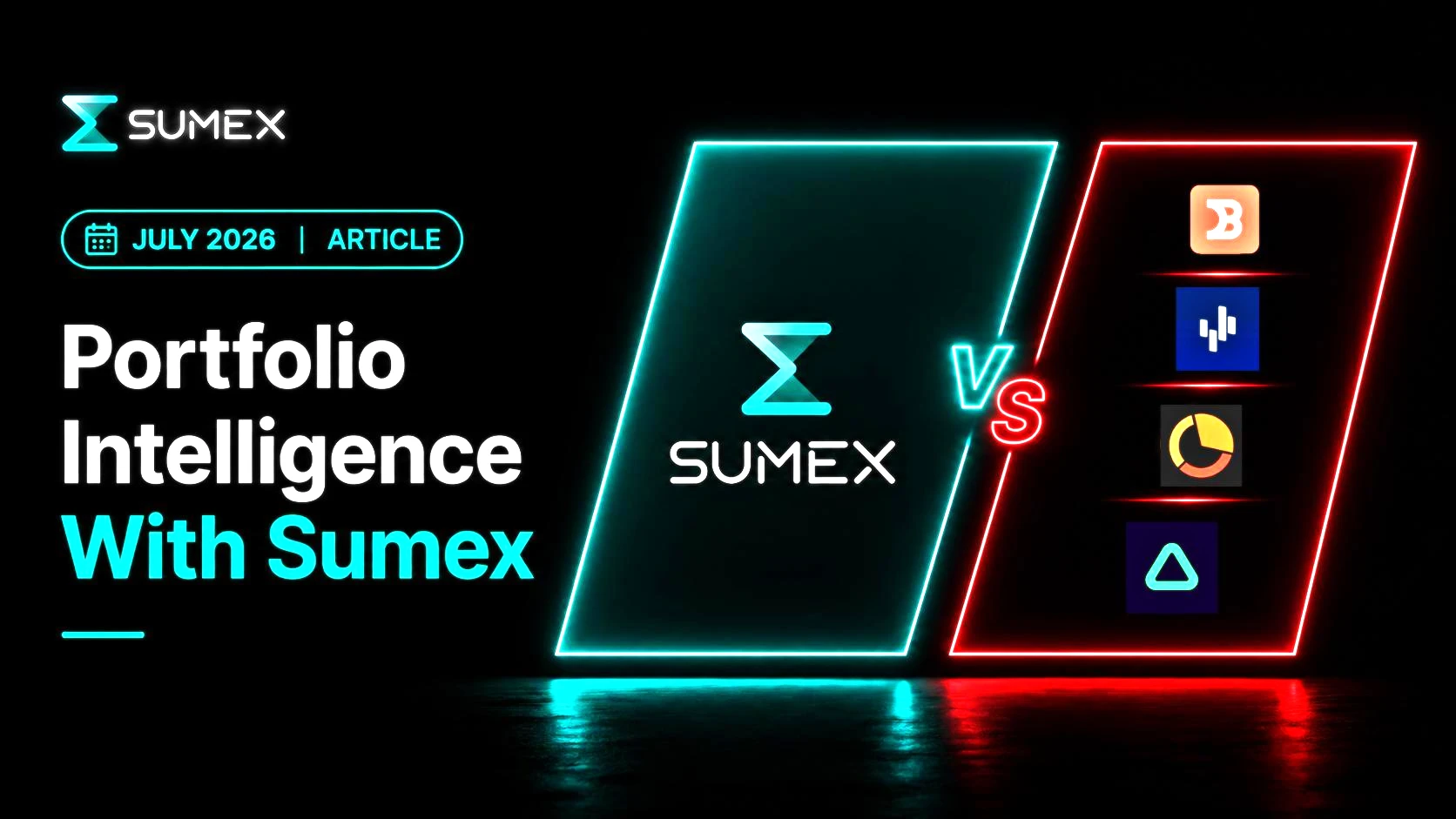
Many crypto traders don't rely on a single application to understand their portfolio. Instead, they build a workflow using several specialized tools.
The problem is that every tool solves only part of the workflow, and users often need several of them to understand their overall portfolio.
One Workspace Instead of Multiple Portfolio Tools
Instead of asking users to maintain separate tools for wallets, exchanges, portfolio monitoring, and trading activity, Sumex brings connected wallets and exchanges together into a single trading workspace where portfolio intelligence becomes part of everyday decision-making.
Once your Wallet Bundles and Exchange Bundles are connected, the Dashboard becomes a portfolio intelligence layer that combines information across supported sources.
Instead of seeing isolated accounts, you gain a broader view of your crypto activity.
This includes:
- Portfolio balances
- Total equity
- Profit and loss (PnL)
- Asset exposure
- Trading and wallet activity
- Connected source status
- Relevant market context
- Opportunity and alert information
The objective is not simply to display numbers but to provide meaningful context that helps users understand what deserves attention.
Portfolio workflows are designed as a decision-support layer that surfaces balances, equity, positions, PnL, exposure, connected source status, alerts, and market context across wallet bundles and exchange bundles.
One Dashboard Instead of Multiple Tabs
Without a unified workspace, checking your portfolio often means opening several browser tabs and applications.
For example, you may need to:
- Open one exchange to review futures positions.
- Open another exchange to check spot balances.
- Connect to a wallet to verify on-chain assets.
- Visit another protocol to monitor DeFi activity.
Each platform only tells part of the story. While such solutions were considered decent and somewhat innovative when they first came out, as the industry matured, the market was overdue for a real unified experience.
Existing Solutions & Limitations
| Tool | Purpose | Web3 | CEX | Pricing |
|---|---|---|---|---|
| DeBank | DeFi wallet & on-chain portfolio tracking | ✅ Only limited EVM + Solana | ❌ | Free with optional paid premium features; Very basic tracking |
| CoinMarketManager | CEX trading journal & performance analytics | ❌ | ✅⚠️ Only tracking | Free limited to 1 exchange with limited functionality; Pro from $699/year; |
| CoinStats | Crypto portfolio tracker | ✅⚠️ Multi-chain; Not live updates | ✅⚠️ Only tracking; Not live updates | Ads, Free version with 10 sync / day only; Premium from $15/month |
| Delta | Multi-asset portfolio tracker | ⚠️ Limited Web3 support | ✅ | Free tier is very limited; Delta PRO from $80–100/year; Limited tracking |
| Sumex | Portfolio intelligence across wallets & exchanges | ✅ Agnostic with the widest support: EVM, Solana, Stellar, Tron, Sui, TON, Dash, etc. | ✅ Exchange Bundles, both CEXes and Perp DEXes - tracking and management | Free to use; No registration, no KYC. All assets, all wallets, all exchanges, live updates. Intelligent insights, not basic stats. |
Sumex reduces this fragmentation by bringing connected sources into one dashboard, allowing users to review portfolio information without constantly switching between services.
This creates a clearer understanding of overall portfolio health and current market exposure.
From Information to Action
Collecting portfolio data is only part of the challenge. The real value comes from understanding what that data means.
Imagine you hold long-term assets in a self-custody wallet, actively trade on two centralized exchanges, and keep stablecoins on another platform.
Instead of opening multiple dashboards to check each account individually, Sumex brings your connected wallet bundles and exchange bundles into one dashboard. You can quickly review:
- Total portfolio value as a whole
- Asset exposure and allocations in sources
- Active trading positions
- Historic trading performance
- Invested allocation and lending health factors
- Recent portfolio activity
- DeFi approvals & delegations at risk
Seeing this information together makes it easier to identify concentration risk, spot underperforming assets, verify that connected sources are updating correctly, and decide whether your portfolio needs attention.
Portfolio intelligence isn't just about seeing more data. It's about seeing the right information together at the right time.
Monitor More Than Just Balances
Many portfolio trackers focus primarily on asset values. Portfolio intelligence goes further. Beyond balances, users also need visibility into:
Portfolio Equity
Understanding the total value of your holdings across connected sources.
Positions
Reviewing active trading positions across connected exchanges.
Profit and Loss (PnL)
Tracking how your portfolio is performing over time.
Asset Exposure
Seeing where your capital is concentrated before making another trade or investment.
Activity
Reviewing recent trading and wallet actions across connected sources.
Source Status
Knowing whether each Wallet Bundle or Exchange Bundle is properly connected and updating.
Together, these metrics provide a more complete picture than balance tracking alone.
Make Better Decisions With Better Context
Information becomes valuable when it helps you decide what to do next.
For example:
A trader notices that one asset now represents a much larger percentage of the portfolio than intended.
Instead of discovering the imbalance days later, the dashboard immediately highlights the increased exposure.
Or perhaps a user sees that one Exchange Bundle has stopped updating.
Rather than assuming their portfolio has not changed, they can investigate the connection before relying on outdated information.
These are examples of portfolio intelligence supporting decisions rather than simply displaying data.
Connected Sources Create a Unified View
The dashboard becomes most useful after connecting the sources that make up your crypto activity.
These may include:
- Wallet Bundles for self-custody assets and on-chain activity.
- Exchange Bundles for trading accounts and portfolio data.
As additional sources are connected, the dashboard provides a more complete view of your overall portfolio.
Instead of treating wallets and exchanges as separate environments, Sumex organizes them within one workspace designed for portfolio clarity.
Common Mistake
Many users think portfolio tracking simply means checking account balances.
That approach overlooks the information needed to make timely decisions.
Portfolio intelligence combines balances with portfolio context, including positions, PnL, exposure, source status, and relevant market information.
The value comes from understanding what has changed and what may require attention, not just seeing how much crypto you own.
Checklist
Before relying on your portfolio view:
- Connect your Wallet Bundles and Exchange Bundles.
- Review balances and total equity.
- Check the current PnL and portfolio exposure.
- Confirm all connected sources are updating correctly.
- Review any alerts or opportunity context available in the dashboard.
- Identify any asset or position that may require attention today.
Open the Unified dashboard and review your portfolio intelligence view across your connected wallets and exchanges.
Crypto Portfolio Intelligence FAQ
What is crypto portfolio intelligence?
Crypto portfolio intelligence goes beyond balance tracking by combining portfolio equity, profit and loss (PnL), asset exposure, positions, connected source status, and market context into a single view that helps users make more informed decisions.
How is portfolio intelligence different from a crypto portfolio tracker?
Traditional portfolio trackers primarily display balances and asset values. Portfolio intelligence adds context by combining data from connected wallets and exchanges with positions, PnL, exposure, alerts, and portfolio activity to provide a more complete understanding of your portfolio.
Can Sumex monitor both wallets and exchanges in one dashboard?
Yes. Sumex allows users to connect Wallet Bundles and Exchange Bundles to create a unified portfolio dashboard. This provides a consolidated view of balances, equity, positions, PnL, asset exposure, portfolio activity, and connected source status across both self-custody wallets and centralized exchanges.
How does Sumex provide better crypto portfolio intelligence than traditional portfolio trackers?
Unlike many traditional crypto portfolio trackers that focus primarily on balances or support only wallets or exchanges, Sumex combines Wallet Bundles and Exchange Bundles into a single workspace. Users can monitor balances, portfolio equity, profit and loss (PnL), positions, asset exposure, portfolio activity, connected source status, and relevant market context with live updates across both self-custody wallets and centralized exchanges, helping them make more informed decisions.